We built an entire intellectual industry on two phrases from Adam Smith: the “invisible hand” and the “butcher, brewer, baker.” They are quoted like scripture from a religion nobody quite believes but everybody repeats. But the real Smith lives elsewhere, in lines that are messier, more humane, and far closer to our present.
It’s also worth remembering: Smith was not an economist. He was a professor of moral philosophy, teaching ethics, jurisprudence, rhetoric, and what his students called “political economy.” The word economics did not yet exist. The math came later; the people came first.
What follows are five quotes that deserve daylight. Each is paired with the modern world we live in now. And each carries two kinds of notes — the short Reference Notes (RN) that anchor the claims, and the longer Tangential Notes (TN) that wander off, awkward and interesting, in ways Smith himself might have appreciated.
1) Flourishing and the Many, Not the Few
“No society can surely be flourishing and happy, of which the far greater part of the members are poor and miserable.” — Wealth of Nations, I.viii.36
Smith planted his flag early. Prosperity is not an abstract number; it is the lived condition of the majority. GDP can rise, stock markets can set records, but if most people live with stagnant wages, expensive housing, and precarity, then society is not flourishing.
Modern inequality trends echo Smith’s concern. Since the 1980s, wage gains have tilted toward the top while the middle has flatlined [RN1]. Economists like Thomas Piketty demonstrate that wealth, if left alone, tends to concentrate — returns on capital outpace growth [RN2]. What results is not only material disparity but civic corrosion: declining trust, populist backlash, and the sense that the system is rigged. Smith anticipated this. An economy that calls itself successful while leaving the many “poor and miserable” is running on borrowed legitimacy. [TN1]
2) To Be Loved, and To Be Lovely
“Man naturally desires, not only to be loved, but to be lovely.” — Theory of Moral Sentiments, III.2.1
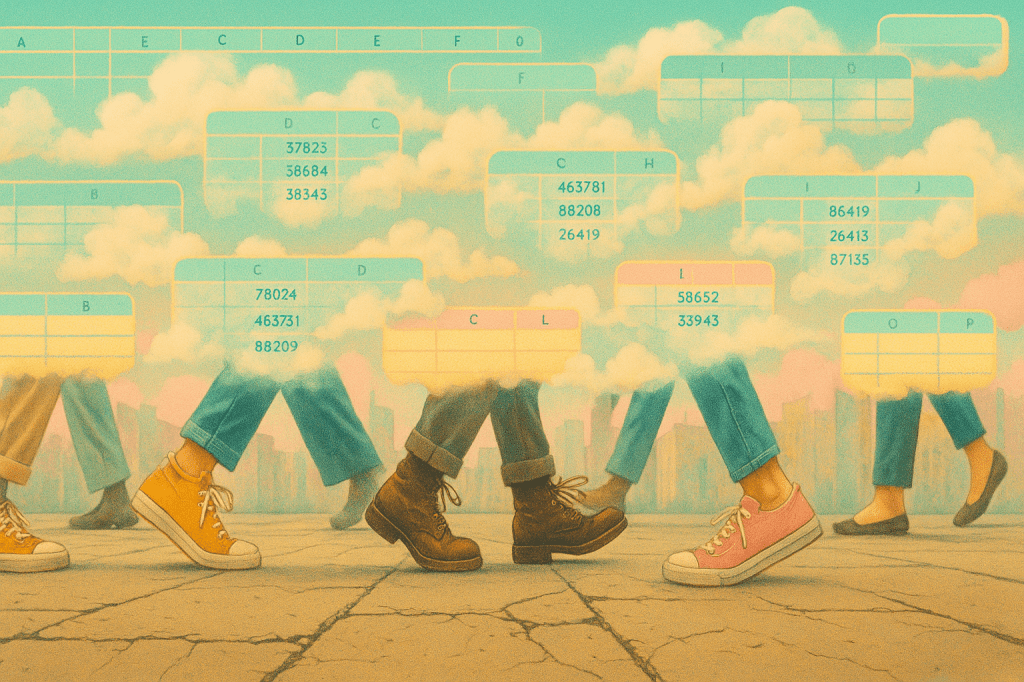
Here Smith makes a distinction that lands like prophecy in the first two decades of our digital age. To be loved is to be noticed, approved, applauded. To be lovely is to deserve esteem, even if no one is looking. One is applause; the other is merit.
Social media has collapsed the two into one, rewarding “being loved” with hearts, likes, and follows, while neglecting the harder task of being lovely. Psychologists show how likes trigger quick dopamine bursts that keep us hooked [RN3]. Studies of “moral grandstanding” reveal that many public declarations of virtue are less about belief and more about status-seeking [RN4]. Smith would recognize the danger: when being noticed becomes the same as being worthy of notice, society tips into hollowness.
Smith’s remedy — the impartial spectator, the imagined voice that asks, “Would this still be praiseworthy if no one saw it?” — is almost radical now. In an economy built on visibility, his call is to cultivate worth even in silence. [TN2]

3) The Man of System, Revisited [RN5]
“The man of system…is so enamoured with the supposed beauty of his own ideal plan of government, that he cannot suffer the smallest deviation from any part of it.” — Theory of Moral Sentiments, VI.ii.2.17
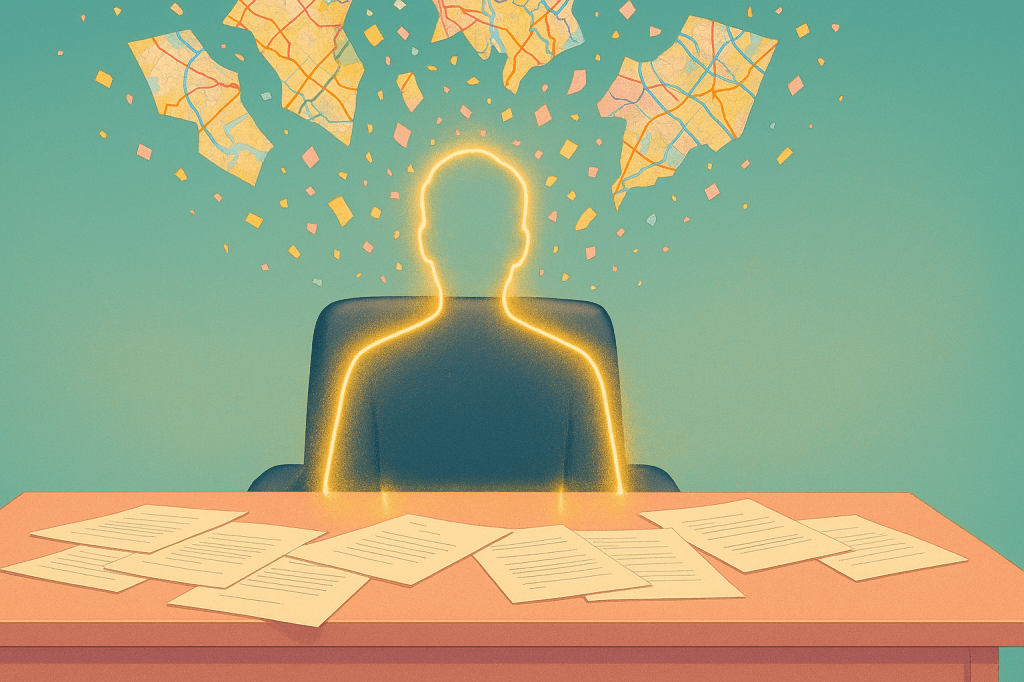
Smith skewered the technocrat before the word existed. The “man of system” loves his design too much and people too little. He cannot tolerate deviation. History is thick with his failures: Soviet central planning, brittle five-year schemes, or more recently, China’s Zero-COVID strategy that ignored feedback until it imploded [RN6].
But the warning is not just for authoritarian states. Democracies, too, are tempted by the clean lines of models and algorithms. Algorithmic governance promises efficiency but often smuggles in bias [RN7]. A formula on paper can look elegant but play out unjustly in practice. Smith’s counsel is humility: leave room for mess, for variance, for human motion. The crooked timber of humanity cannot be planed smooth, and attempts to do so produce brittle systems. [TN3]

4) Work Shapes the Mind [RN8]
“The understandings of the greater part of men are necessarily formed by their ordinary employments.” — Wealth of Nations, V.i.f.50
For Smith, work was not just what people did. It shaped their minds, their habits, their outlook. He worried that repetitive factory labor would dull intellect unless counterbalanced by education. Today the danger is different: AI and automation poised to erase whole categories of employment [RN9].
The risk is not only economic but existential. Work provides structure and belonging. Take it away, and you remove the scaffolding of identity. Research on past industrial disruptions shows how unemployment spirals into despair, ill health, even community breakdown [RN10]. Smith’s insight was that employment is not just a wage; it is a way of being. The AI age will test whether societies can invent new sources of meaning as fast as they invent new machines. [TN4]
5) Government and the Garrison of Property
“Civil government…is instituted for the defense of the rich against the poor.” — Wealth of Nations, V.i.b.12
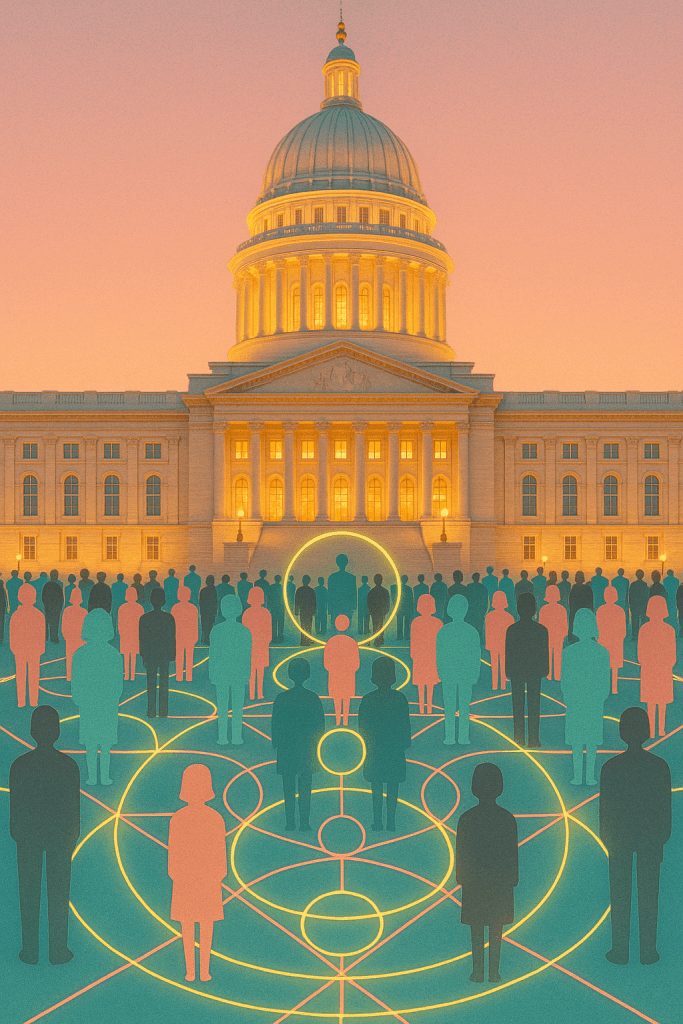
This is Smith unsugared. Government, in practice, often works less as the guardian of liberty than as the night watchman of property. The police, the courts, the tax code — they lean toward those who already have.
Modern evidence backs him. Political scientists Gilens and Page show that in the U.S., the preferences of average citizens barely register unless they overlap with the wealthy [RN11]. Tax codes have grown less progressive, regulatory agencies bend toward capture, and campaign finance tilts the field [RN12]. The game is structured to protect the castle, and those in it.
Smith wasn’t celebrating this; he was diagnosing it. The danger is clear: without counterweights, democracies degrade into oligarchies. The remedy, then and now, is deliberate design — finance reform, civic institutions, progressive taxation. Without them, government becomes a garrison for property, staffed by those already inside the walls. [TN5]
Conclusion
The forgotten lines remind us that Smith was not a one-note prophet of markets but a moral philosopher cataloging the ways humans stumble. He worried about inequality, esteem, brittle systems, the shaping power of work, and the tilt of governments toward wealth. He worried, in short, about us.
To read him whole is to realize our problems are not new. And that our responses must be twofold: the hard clarity of data, and the awkward humility of philosophy.
Reference Notes
[RN1] Adam Smith, An Inquiry into the Nature and Causes of the Wealth of Nations, Book I, Chapter VIII, “Of the Wages of Labour.” Liberty Fund / AdamSmithWorks. https://www.adamsmithworks.org/documents/chapter-viii-of-the-wages-of-labour
[RN2] World Inequality Lab. World Inequality Report 2022. WID.world (Open PDF). https://wir2022.wid.world/www-site/uploads/2021/12/WorldInequalityReport2022_Full_Report.pdf
[RN3] McLean Hospital. Social Media and Mental Health. (2025). https://www.mcleanhospital.org/essential/social-media
[RN4] British Psychological Society. Psychological study of “moral grandstanding” helps explain why social media so toxic. Research Digest (2019). https://www.bps.org.uk/research-digest/psychological-study-moral-grandstanding-helps-explain-why-social-media-so-toxic
[RN5] Adam Smith, The Theory of Moral Sentiments, Part VI, Section II, Chapter 2. Liberty Fund. https://oll.libertyfund.org/titles/theory-of-moral-sentiments-and-essays-on-philosophical-subjects
[RN6] Jude Blanchette, China’s Zero-COVID: What Should the West Do? Center for Strategic and International Studies (CSIS). https://www.csis.org/analysis/chinas-zero-covid-what-should-west-do
[RN7] OECD. Algorithmic Bias: The State of the Situation and Policy Recommendations. OECD Digital Education Outlook (2023). https://www.oecd.org/en/publications/oecd-digital-education-outlook-2023_c74f03de-en/full-report/algorithmic-bias-the-state-of-the-situation-and-policy-recommendations_a0b7cec1.html
[RN8] Adam Smith, Wealth of Nations, Book V, Chapter I, Part f. Liberty Fund. https://oll.libertyfund.org/titles/smith-an-inquiry-into-the-nature-and-causes-of-the-wealth-of-nations-cannan-ed-vol-2
[RN9] Carl Benedikt Frey & Michael Osborne. The Future of Employment: How Susceptible Are Jobs to Computerisation? Oxford Martin School (Working Paper, 2013). https://www.oxfordmartin.ox.ac.uk/publications/the-future-of-employment/
[RN10] Anne Case & Angus Deaton. Mortality and Morbidity in the 21st Century. Brookings Papers on Economic Activity (2017). https://www.brookings.edu/articles/mortality-and-morbidity-in-the-21st-century/
[RN11] Martin Gilens & Benjamin Page. Testing Theories of American Politics: Elites, Interest Groups, and Average Citizens. (2014). Open PDF mirror. https://www.almendron.com/tribuna/wp-content/uploads/2014/04/testing-theories-of-american-politics-elites-interest-groups-and-average-citizens.pdf
[RN12] Brookings Institution. Rising Inequality: A Major Issue of Our Time. (2022). https://www.brookings.edu/articles/rising-inequality-a-major-issue-of-our-time/
Tangential Notes
[TN1] — On Flourishing and Inequality
Smith’s line about the “greater part” being poor and miserable reads, in our era of luxury condos and payday loans, less like 18th-century prose and more like a subtweet at Elon Musk. You can almost imagine him standing in front of a modern Davos panel — CEOs onstage, chin-stroking about “inclusive growth” — and muttering: Are your people still miserable? Then your society isn’t flourishing. End of story.
It’s amazing how we’ve normalized this split-screen existence. On one half: champagne IPOs, rockets to Mars, crypto yachts. On the other: the clerk at CVS working two jobs and still dodging eviction. Smith’s logic is brutally simple. If the bottom 60–70% live lives of anxiety and deprivation, your “growth” is cosmetic, like concealer over a open wound.
Here’s the awkward modern echo: Thomas Piketty’s 700-page doorstop Capital in the Twenty-First Century basically says the same thing, only with more graphs and fewer witty asides. His famous r > g (the rate of return on capital exceeds the growth rate of the economy) is just algebra confirming Smith’s hunch. And the result? Wealth isn’t trickling down; it’s coagulating.
And then there’s the psychic cost: inequality doesn’t just mean different houses or cars. It breeds mistrust. Societies with big wealth gaps have higher crime, worse health outcomes, more conspiracy theorists yelling on YouTube. The fabric frays. Smith didn’t have regression analyses, but he had eyes. He watched Scottish laborers living at the edge of subsistence while aristocrats hunted grouse and knew: this ends badly.
(Parenthetical rabbit hole: you can track revolutions, uprisings, populist backlashes, even the spread of QAnon-style conspiracies, by measuring inequality levels. When the majority feel excluded from “flourishing,” they’ll find a story — sometimes wild, sometimes violent — to explain the betrayal. This is more than wages. It’s about dignity.)
[TN2] — On Being Loved vs. Being Lovely
Smith basically predicted TikTok before TikTok: a giant machine that scratches our itch to be loved (look, hearts! followers! attention!) but rarely pushes us to be lovely (deserving, virtuous, genuinely admirable).
It’s the tragedy of our feeds: being loved is algorithmically easy. Post the right meme at the right time, mouth along to a trending audio clip, and voilà, you’re “loved.” Being lovely is harder. It requires boring, offline stuff like honesty, patience, showing up for people when they’re sick, resisting the urge to add to the noise with troll posts. None of which generates content.
And this is why Instagram feels like one giant morality play acted out in bad lighting: we’ve learned to simulate loveliness. The academic term is “virtue signaling” — moral grandstanding, as the PLOS ONE folks called it. You declare your solidarity with the fashionable cause, you retweet the right hashtags, you perform indignation like a Shakespearean aside. And the applause comes, the dopamine pings. You are “loved.” But have you become lovely? Doubtful.
There’s a cruel irony here. The people who most crave being loved online often end up lonelier, more anxious, less secure. The hollow applause becomes addictive — you need more to feel whole. Like eating Pringles for self-esteem. Smith would call this a collapse of the impartial spectator: we’ve outsourced our internal signal to the crowd, a crowd run by an algorithm built to maximize “engagement” (read: ad revenue).
(Parenthetical rabbit hole: what if we re-engineered social media around Smith’s impartial spectator instead of advertisers? Imagine an app that withholds your post for 24 hours and then asks, “Would you still be proud of this tomorrow?” Some people would never post again. The servers would be empty. Maybe that’s the point.)
Being lovely is slow, invisible, inconvenient. Which is why it rarely trends.
[TN3] — On the Man of System
The “man of system” is Smith’s villain, and you know him instantly: the bureaucrat with a flowchart, the consultant with a 200-slide deck, the algorithm designer who thinks “fairness” is just a line of code. He doesn’t hate people; he just doesn’t notice them.
Take Zero-COVID in China. The plan was elegant, immaculate, efficient — until it wasn’t. Entire cities sealed, drones flying overhead announcing rules, citizens welded inside apartment blocks. All deviation was heresy because the system was “too beautiful” to doubt. Then reality arrived: virus mutations, economic collapse, people banging pots out their windows in protest. The man of system is allergic to feedback.
Democracies do this too, just with better branding. We outsource justice decisions to risk-scoring algorithms, or welfare determinations to automated systems, and then shrug when the outputs are biased. “The model says so,” as though the model isn’t just a calcified snapshot of past prejudice. Smith saw it coming: if you think people are pawns, don’t be surprised when they refuse to move like you want.
(Parenthetical rabbit hole: one of the weirdest features of Silicon Valley is its allergy to mess. The entire ethos is about optimization: reduce friction, streamline processes, “disrupt inefficiency.” But humans are inefficiency machines. We marry the wrong people, order dessert we regret, procrastinate for no reason. Smith would have told them: stop trying to sandpaper humanity into smooth efficiency. The splinters are the point.)
The man of system fails because he can’t appreciate the chaos.
[TN4] — On Work and Identity
Smith’s line about ordinary employments shaping the mind is the closest thing he has to psychology. Work is not just survival; it’s identity scaffolding. Which is why job loss feels like amputation.
We’ve seen this in slow motion in deindustrialized towns. The factory closes, and suddenly the pub empties, the football team disbands, the high street decays. People don’t just lose wages; they lose meaning. Smith, in his eighteenth-century pin factory, already knew: work narrows or broadens the mind depending on its shape.
Now add AI. The jobs on the chopping block aren’t only repetitive. They’re also white-collar roles that once conferred prestige. Imagine whole classes of lawyers, accountants, copywriters replaced by autocomplete on steroids. What happens when the people whose very self-worth was “I am a professional” wake up to find that identity automated?
(Parenthetical rabbit hole: psychologists have a phrase — “deaths of despair” — to describe the cocktail of depression, addiction, and suicide that follows economic dislocation. It’s a phrase both horrifying and perfect in its bluntness. But what happens when despair scales globally, at the speed of software updates? Smith worried about pin factories numbing the brain; we may need to worry about AI evacuating the brain entirely — or leaving it idle, unmoored, purposeless.)
Losing a job is like losing your mirror. You no longer know who you are when you wake up in the morning. And if Smith was right, this is not a side effect of AI modernization; it’s the central crisis.
[TN5] — On Government and the Rich
Smith’s line about government defending the rich against the poor feels like it was ripped from a Twitter thread about Lobbying. You can almost hear him sighing: you wanted justice, but what you got was an institution built to keep property safe.
Modern data confirms it. Gilens and Page ran the numbers and found that the average citizen’s preferences have “little or no independent influence” on U.S. policy. Translation: you don’t matter unless a lobbyist agrees with you. Smith saw it in the 1700s; we see it today in campaign finance, tax loopholes, regulatory capture. Same play, better suits.
The funny (or tragic) part is how bipartisan it all is. Both parties, all stripes — wealth bends policy. The castle is defended, not stormed.
(Parenthetical rabbit hole: ever notice how “defense of property” sounds noble until you realize it includes things like defending offshore tax havens, or lobbying to keep insulin overpriced, or protecting billionaires’ rights to build bunkers in New Zealand? Smith, who also believed in progressive taxation, would probably laugh — a bitter laugh — at the idea that protecting oligarchic fortunes counts as liberty.)
His line isn’t despairing. It’s diagnostic. He’s saying: expect this tilt, and build counterweights. Otherwise your democracy calcifies into oligarchy.
This is enough.
 Rick Marriner
Leave a comment